Sunday, 17 February 2019
GLC TV - AODN 2017 Indonesia - TV Rao

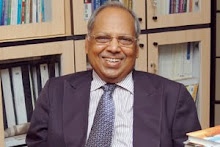 Dr. T. V. Rao is currently Chairman, TVRLS. He was a Professor at the Indian Institute of Management Ahmedabad and until recently IIMA Society and Board member. He is Co-founder of the National HRD Network and Academy of HRD in India. He initiated the HRD Function and movement in India in mid-seventies starting with Larsen & Toubro, State Bank of India and other organizations. Dr. Rao authored over 60 Books, worked as short term consultant with UNDP, Malaysia; UNESCO, Bangkok; IIEP, Paris; USAID, Indonesia; Commonwealth Secretariat, London etc. and received many awards from various bodies including APFHRM HR Professional of the year 2019.
Monday, 17 September 2018
What is your Identity?
What is your Identity?
(some reflections from my life and career: dedicated to late V S Vyas,
Udai Pareek, Ravi Matthai and Samuel Paul)
Some time in late seventies Prof. V S Vyas suggested to me
that I should focus my work to a few areas rather than being everywhere. Samuel
Paul allowed me to diffuse myself into various though I was recruited to work
with Ravi on Education Systems. It was a well-intended and good suggestion. I
kept thinking more after that encounter with Vijay to justify and continue to
do what I wanted to do and whatever I enjoyed. I joined IIMA to work in
Education Systems and simultaneously in Organizational Behavior Area. Since I
worked earlier in National Institute of Health Administration & Education
Prof. Satia invited me to join the India Population Project. We conceptualized
and started the first Human Resources Function and called it HRD department. I
worked with David McClelland for a few months had a joint project with him on
psychosocial maturity of Indian students and managers. I was teaching course on
entrepreneurship and even argued unsuccessfully in CFD for a center for
Entrepreneurship to be set up. I became a member of the newly set up Public Systems
Group and as a part of Education work the Jawaja project gained some prominence.
I was also doing some work for the
Indian Society for Applied Behavioral sciences ISABS. I also taught a course on
consumer behavior along with Sasi Misra and wrote a research piece on impact of
sales styles on buyer behavior. Very understandably Prof. Vyas thought that I
can’t be everywhere- Education, Entrepreneurship, Health, Public Systems, Consumer
Behavior, OB and HRD. Around the same time Udai Pareek said that I should spend
more of time in OB rather than on HRD. Though we started the HR function in
L&T and SBI, it was not yet prominent and Udai felt OB is broader than HRD.
Looking back frankly none of these got me to think of focusing on any area. I continued
to do whatever came along and I n enjoyed every piece of work I was involved. I
worked in each one of these areas- perhaps in the minds of some without focus. I
am sure there was an unconscious meaning to all and an internal faith that
these are interrelated.
As far as I am concerned life unfolded itself in very interesting
way in the subsequent forty and an odd year. I continued to work in education and
produced books including Handbook of training for education managers; and
helped in self-renewal of many educational institutions. On entrepreneurship
both Udai and I worked with many groups in Malaysia and trained them to be
facilitators of entrepreneurship and had even brought out a couple of books. My
latest in entrepreneurship in the last decade is the book I joined with Kuratko
on entrepreneurship. In recent times I promote developing entrepreneurial qualities
as a mission of HRD facilitators. HRD emerged as a profession and I became a
strong promoter of HRD as a function, philosophy, HRD values, systems and
processes and wrote many books on HRD starting with HRD missionary, HRD Audit,
Future of HRD etc. I took a totally different view of HRD when I was invited as
a consultant of the Commonwealth Secretariat, London and brought out a report “Foundations
for Future: led by Sam Pitroda and circulated
at the CHOGM meet and published a book of HRD at National level with several
country experiences. I established the National HRD Network and the Academy of HRD to promote HRD philosophy,
concepts, and research in HRD and perhaps added a new dimension to my work on
Institution Building. While I was at XLRI I started the center for HRD and went
on pursuing with XLRI thereafter not to kill the center. Inspired by the repeated
suggestions during my instrumented feedback session in OB, when participants repeatedly
sought feedback on their personality patterns from their coworkers, I stumbled
on a methodology and offered a program on top management styles and organizational
effectiveness which alter on named as 360 Degree Feedback. I unsuccessfully
promoted assessment centers in mid seventies as a part of my work with entrepreneurship
Development programs being some by GIIC, GIDC and GSFC under the leadership of
Dr. V G Patel. I tried in small way to introduce assessment centers in 1975
when Manohar Nadkarni introduced me to this concept bud it did not work beyond
Parishram. Post liberalization we picked up Assessment centers and promoted
them left and right with NTPC, ONGC, LIC, ESCORTS, SAIL and such big corporations.
If you ask me today what my focus has been, all these 40 years I have no
answer. My work is as diffused as it was in late seventies. I am into HR, OB, Health,
Education, Institution Building, Entrepreneurship, HR audit, Psychometric
testing, climate surveys, HRD audit, 360 Feedback, Performance Management, Self-renewal
of NGOs, and what not? I have no real identity and perhaps I would still have
the same answer to Prof. V S Vyas. It looked that Vijay appreciated my diffusion
into every area which he may have called earlier a lack of focus. I never
discussed with him this issue. But his warmth and appreciation spoke a lot than
his advice in late seventies. Udai never approached this issue again after 1981
and he supported every single activity I was involved in. I think this diffusion and lack of focus may
have fitted with Ravi’s concept of a Faculty member at IIMA. Ravi used to say
that every faculty member is a professor on mission and there is not one way of
fulfilling your mission but many. Once when I asked him to join PSG as a member,
he said “sure but don’t bind me with the identity of any one area or a center
or a group. Everyone is free to use my work”. I suppose that broadly sums up my
lack of focus.
If I must live a life all over again I will still be focus-less
and diffused. I proudly start always introducing myself as a student of
science, then moved into education and ended up as a Psychologist and remained behavioral
scientist all through the rest of my life. My core discipline if you like is scientific
temper and behavior focus and all the others are application areas. Life itself
is an application area and it does not matter if you keep shifting your focus. Rolling
stones may not gather mass but do stop at times and leave their mark wherever
they pass through if they’re heavy enough.
My suggestion for Faculty is enjoy your work and do what you
feel involved and take it to the full end whatever you do. It does not matter the
number of things you do if you see meaning in them.
If you don’t like what I have written please do not bother.
Have your way and do it your way!
T. V. Rao
Dr. T. V. Rao is currently Chairman, TVRLS. He was a Professor at the Indian Institute of Management Ahmedabad and until recently IIMA Society and Board member. He is Co-founder of the National HRD Network and Academy of HRD in India. He initiated the HRD Function and movement in India in mid-seventies starting with Larsen & Toubro, State Bank of India and other organizations. Dr. Rao authored over 60 Books, worked as short term consultant with UNDP, Malaysia; UNESCO, Bangkok; IIEP, Paris; USAID, Indonesia; Commonwealth Secretariat, London etc. and received many awards from various bodies including APFHRM HR Professional of the year 2019.
Sunday, 5 August 2018
Hurconomics 15: CEO Heal Thyself
Dr. T. V. Rao is currently Chairman, TVRLS. He was a Professor at the Indian Institute of Management Ahmedabad and until recently IIMA Society and Board member. He is Co-founder of the National HRD Network and Academy of HRD in India. He initiated the HRD Function and movement in India in mid-seventies starting with Larsen & Toubro, State Bank of India and other organizations. Dr. Rao authored over 60 Books, worked as short term consultant with UNDP, Malaysia; UNESCO, Bangkok; IIEP, Paris; USAID, Indonesia; Commonwealth Secretariat, London etc. and received many awards from various bodies including APFHRM HR Professional of the year 2019.
Saturday, 14 April 2018
Hurconomics 8: Five conditions to make training an investment and not ex...
Dr. T. V. Rao is currently Chairman, TVRLS. He was a Professor at the Indian Institute of Management Ahmedabad and until recently IIMA Society and Board member. He is Co-founder of the National HRD Network and Academy of HRD in India. He initiated the HRD Function and movement in India in mid-seventies starting with Larsen & Toubro, State Bank of India and other organizations. Dr. Rao authored over 60 Books, worked as short term consultant with UNDP, Malaysia; UNESCO, Bangkok; IIEP, Paris; USAID, Indonesia; Commonwealth Secretariat, London etc. and received many awards from various bodies including APFHRM HR Professional of the year 2019.
Sunday, 22 January 2017
T. V. Rao on HR- Unpublished Interview For BW HR December 2016.
In Conversation with Dr. Rao:-
1.
What is your opinion of HR in the country?
Both good and not so good. HR as
discipline and a profession has made some impact but not as much as it could
have. HR professionals are continuously missing opportunities to make a higher-level
impact. Post liberalization when IT sector and new economy industry are putting
India on the world map, and knowledge economy was developing HR should have
lead the knowledge economy. It should have focused on continuous competency
building and creation of learning organizations. In some of the sectors that
have created a learning culture it is more attributable to wise CEOs than their
HR professionals. Similarly, with the emphasis on skill development, startups
and make in India, HR professionals should have been in the forefront to conceptualize
and run the massive effort to transform the country. The current drive against
corruption through demonetization needed a lot of HR interventions. We hear no
one consulting HR professionals on a massive HR issue caused by demonetization.
No one even thinks if HR has a role. HR’s failure is its limiting itself to
corporate sector and keeping itself away from the rest of life while it is
supposed to deal with human beings.
2. Do you think Indian
HR & HR Leaders are running in the right direction? What would you like to
change, if given an opportunity?
Yes, HR and HR leaders are running in
the right direction in terms of short term management and getting immediate
results and managing the show in corporate sector. They have been contributing
to employee recruitment, engagement, retention, and such other issues
reasonably well but can do far better with some originality and creativity.
I would like them to focus more on long
term building of human capital within and outside the firms. I would like them
to focus a lot more on values, culture building, leadership development, and employee
motivation. They should begin to work with the government and transform the
government to deliver better services. HR’s main job is to make the
organizations, institutions and nations happy places to live through
competence, commitment and culture building at all levels.
3. What do you think
are the competencies which Indian HR Leaders should work on, keeping in mind
that we would be one of the youngest workforces in few years?
In my view OCTAPACE values is very
critical: Openness (giving ideas and creating a culture of openness),
Collaboration (enabling people to sacrifice narrow individual interests for
larger team, organizational and national goals) , Trust and Trustworthiness,
Authenticity speaking what you feel rather than what pleases other person),
Pro-action and Initiative, Autonomy (exercising discretion and creating space
for people to sue some discretion), Confrontation (of issues and fearlessly
giving views and opinions) and Creativity and innovation. Commitment to the
firm, to the communities and society which give us the context to live. Professionalism,
change management, influencing the CEOs, Giving right direction to the CEO and
customer sensitivity. Ability to design and use HR policies and processes that
cater to the changing needs of the people with a view to identify, harness, develop
and utilize their competencies
4. How do you think
they should upgrade themselves and these competencies, keeping in mind the globalization?
More self-reviews need to be
undertaken by HR fraternity. They should seek 360 Degree Feedback. They should
have a lot more international exposure, more exposure to customers and
business, more focus on competency, commitment and culture building. They
should review their roles in administrative tasks and focus more on
developmental activities. They should focus on human capital building
activities and get their performance reviewed on intangible contributions a lot
more. They should also spend time in villages and work with NGOs and other
groups to understand the country, its roots and culture.
5. Any advice to the
one-click generation readers of BW HR who are making a career in HR or have
just started their career in HR?
Learn about the business you are entering.
People have taken long time to build institutions. Read history and learn about
the need to be customer driven and committed. Stay long enough in a company.
Don’t shift jobs like you change your screens at a click. We appreciate your speed, and your need for
independence and entrepreneurship. Invest your talent in the company you work
and make a difference. Companies offer you lot more scope to experiment and
make things happen. Pick up right
systems and work on them. Improve your own expertise and credibility. The world
is changing and seniors are beginning to show their willingness to learn just
as your parents have begun to learn from you. If not, change the culture and
that is your challenge.
6. Is Engagement an
overhyped term? Are we not having enough right implementers? I am coming from
the overall fully engaged score of 13% globally and 9% in India.
I am not sure if I agree fully with
the statistics and figures that indicate low levels of engagement in Indian
workforce. They are certainly engaged, although it could be improved a lot
more. We have built our country as a subsidy culture. Everyone expects their
organizations, HR departments and country to create conditions for more
engagement. This approach itself is wrong. It looks as though employees depend
on the firms to make them engaged rather than they themselves taking ownership
for engaging. Our consulting firms have wrongly promoted employee engagement as
the sole responsibility of HR policies. Rather we should turn the tables and
make employees responsible for enhancing their own engagement levels. A less
engaged employees does a lot more harm to self and his/her family and creates
stress all around. No HR policies can make all people equally engaged. High
time HR works for shifting the ownership of engagement equally to
employees. Today’s youth will leave as
soon as they feel they are not engaged. So, measuring employee engagement and
commitment have become very important HR challenges. If talent is not utilized engagement
comes down.
7. Most HR leaders in
large organizations have become more HR administrators than HR implementers.
What is your take on it?
Yes. I am afraid that is true while
there are some honorable exceptions. This has become so particularly true in
the Public sector including the banks which is the largest employer in terms of
people. HR has administration driven and innovation e averse. The days of
uniform HR policies are gone. We now need innovative and heterogeneous HR
policies and practices a to contain complex and diverse workforce.
Dr. T. V. Rao is currently Chairman, TVRLS. He was a Professor at the Indian Institute of Management Ahmedabad and until recently IIMA Society and Board member. He is Co-founder of the National HRD Network and Academy of HRD in India. He initiated the HRD Function and movement in India in mid-seventies starting with Larsen & Toubro, State Bank of India and other organizations. Dr. Rao authored over 60 Books, worked as short term consultant with UNDP, Malaysia; UNESCO, Bangkok; IIEP, Paris; USAID, Indonesia; Commonwealth Secretariat, London etc. and received many awards from various bodies including APFHRM HR Professional of the year 2019.
Monday, 24 October 2016
360 DF Concluding Session on Theory of 360 Feedback
Dr. T. V. Rao is currently Chairman, TVRLS. He was a Professor at the Indian Institute of Management Ahmedabad and until recently IIMA Society and Board member. He is Co-founder of the National HRD Network and Academy of HRD in India. He initiated the HRD Function and movement in India in mid-seventies starting with Larsen & Toubro, State Bank of India and other organizations. Dr. Rao authored over 60 Books, worked as short term consultant with UNDP, Malaysia; UNESCO, Bangkok; IIEP, Paris; USAID, Indonesia; Commonwealth Secretariat, London etc. and received many awards from various bodies including APFHRM HR Professional of the year 2019.
Friday, 30 September 2016
Developing Entrepreneurial Personality for start-ups, engineers and othe...
Dr. T. V. Rao is currently Chairman, TVRLS. He was a Professor at the Indian Institute of Management Ahmedabad and until recently IIMA Society and Board member. He is Co-founder of the National HRD Network and Academy of HRD in India. He initiated the HRD Function and movement in India in mid-seventies starting with Larsen & Toubro, State Bank of India and other organizations. Dr. Rao authored over 60 Books, worked as short term consultant with UNDP, Malaysia; UNESCO, Bangkok; IIEP, Paris; USAID, Indonesia; Commonwealth Secretariat, London etc. and received many awards from various bodies including APFHRM HR Professional of the year 2019.
Subscribe to:
Posts (Atom)