Saturday, 30 January 2016

Mahaveer Jain: Dreams to Eliminate Child Labour

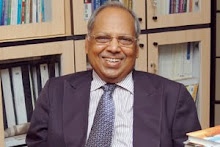
Dr. Mahaveer Jain
Born in 1951 and brought up at village Bhindar of Udaipur district in Rajasthan, Mahaveer is from a joint family with agricultural background. He did his schooling from the village and graduation from Maharana Bhopal College, University of Udaipur (now known as Mohanlal Sukhadia University). Dr. Mahaveer Jain Joined the then National Labour Institute (now known as V. V. Giri National Labour Institute) in 1976 on a project and later became a Senior Fellow (Director) of the Institute. He served this Institute for 37 years in different capacities. During 70s, he got an opportunity to work with tribals and Scheduled Caste communities of the country and successfully organized rural labour camp for the tribals (Bhils) of Kotra village in Rajasthan. The camp was successful in organizing near about 90,000 tribals as a result of which an organization, ‘Adivasi Ekta avam Vikas Samiti’ was formed in 1978. This organization is still active and working independently in the area. Mahaveer was involved in conducting about 100 rural labour camps in different States of the country. The participants of these camps became community mobilisers, local members of government institutions, MLAs of different States, MPs of the country and some of them have become Ministers also. Mahaveer was appointed as a socio-legal investigating Commissioner by the Hon’ble Supreme Court to enquire into and report on the extent to which the twenty-one directives issued by the Supreme Court had been implemented and to indicate the latest position of working and living conditions of labourers in stone quarries and crushers of stone mines in Faridabad, Haryana. The report titled, ‘Bonded Labour: Justice through Judiciary’ published in 1997 and was released President of India. The report highly appreciated by the Hon’ble Supreme Court and was discussed at the United Nations Human Rights Commission at Geneva. It has been updated with latest information for fulfilling the needs of the scholars in the field of bonded labour and reprinted in 2015 after a huge demand from the readers. Several articles were published in different national newspapers, magazines and journals as also the papers on bonded labour were presented in various national and international seminars.

National and International Interventions on Child Labour

In 1990, a Child Labour Cell (renamed as National Resource Centre on Child Labour) was established at the V.V. Giri National Labour Institute and Mahaveer was given the responsibility to coordinate the activities of the Centre. He initiated the process of training, documentation, systematic research, production of documentaries, networking with other Labour Institutes of the States and Publications including street children and child labour series (apart from independent research publications). He became resource person for several organizations working on child labour like ILO, UNICEF, UNDP, World Bank, UNFP and also for all leading NGOs and institutions working on child labour.
One of the significant features was to conduct training of trainers in the field of child labour about which he had got the insight from organizations like Indian Society for Applied Behavioural Science, Delhi and National Training Laboratory for Social Sciences, Bethel, USA. Today, there are many trainers available in the field of child labour, child rights, child marriage, human rights, child prostitution, child trafficking, child begging etc. Trained at V.V. Giri National Labour Institute, they have become nationally and internationally acclaimed trainers. Mahaveer trained more than 2000 trainers in this field and still imparting training as a master trainer. Mahaveer published 39 training manuals for ILO, UNICEF, Government of A.P. and Government of India for different target groups. His books on child labour have been well received and became perspective on child labour in India. He was a part of developing National Child Labour Programme for the country at Prime Minister’s Office and was also part of developing three minutes speech of Prime Minister’s on child labour which honorable Prime Minister read from Red Fort on 15th August, 1993.

The publication activity was used as a tool of dissemination of information on different aspects of child labour especially in the context of information on the issue of child labour growing exponentially.

Besides collaborating with different social partners, Mahaveer also established networking with NGOs, Academicians, Individual Activists, Employers’ Organizations, Lawyers’ Associations, Association of Pediatricians, State Labour Institutions, Administrative Training Institutes, State Institutes of Rural Development, University Departments, UN and other International Agencies towards acceleration of the process of progressive elimination of child labour. He facilitated in making several mandals of Andhra Pradesh child labour free which is documented in one of my book, “Complete Abolition of Child Labour”.
Apna School—A unique education initiative

Fifteen years back, an educational initiative was made in Greater Noida with a dream to enroll hundred percent children in school from village Rampur Bangar. This dream has been fulfilled with admission of about 800 children in the school. The latest dream is to make every child computer literate. The school, now a model school in the area, is run by local community members of the village since its inception. Mahaveer facilitates them as and when required. Recently, college education has also been started in the same village to make the village much more educated and skilled. School has been visited by visitors from USA, Norway, Germany, England, Russia and other European countries.

HR Process Facilitator

Mahaveer extended his soft skills to the field of bonded labour, women labour, tribal labour and rural labour in the unorganized sector. He trained representatives from various NGOs and other social organizations and has also been applying these skills in the organized sector i.e. government sector, public & private sector, multinational companies, UN agencies, NGOs, universities, management institutions and schools for conducting in-house (with companies like Maruti Suzuki India Limited, Honda Car India Limited) and open training programmes. Mahaveer conducted 800 training programmes in the organized sector with 100 industries and is known for conducting training programmes for workers especially union bodies from several organizations/companies of India since 1976 onwards. Mahaveer  developed modules for train-the-trainer in several organizations and brought out 12 Annual Handbooks on Human Resource Initiatives since 2003. The handbook is still being published by Initiatives & Interventions, an organization registered under the Societies Registration Act.

He has a dream to start management institute at his native town and a university for unfortunate youth to don’t have access to education and also dreams to Make India Child Labour free with 100% enrolment of children in school. His journey is on to achieve the dreams. 

Inderjit Khanna: A Note from an Effective Civil Servant

Inderjit Khanna
Inderjit Khanna is one of the civil servatns covered in my book on Effective people published by Random House recently. I wrote the following about Inder in my book: 
" Inderjit Khanna joined the Indian Administrative Service in 1966 in the Rajasthan Cadre and after initial years as SDM, Collector, Deputy Secretary and Director Education he spent fairly long periods of posting in the fields of Rural Development, Education, Planning and Finance. This included two tenures of over 6 years each with Government of India including as Secretary UGC, and a spell of 2 years as a Visiting Professor at the Indian Institute of Management, Ahmedabad from 1981 to 83. His last posting for three years was as Chief Secretary, Rajasthan. After retirement in December 2002, he was appointed and worked as the State Election Commissioner, Rajasthan for 5 years. He is currently associated with the Gita Mittal Foundation which is running 3 Centres for Skill Development of youth in Rajasthan. He is also on the Committees and Boards of 7 institutions in the fields of Health, Education and Rural Development. Inder is highly value driven person. After having worked for his entire life as an IAS officer he leads a simple life in Jaipur as he followed all the values a civil servant should follow- honesty, integrity, commitment to public service. In his own career a when faced with the choice between going to work in USA or UK on study leave or to work at IIMA, Inder chose IIMA as a visiting Professor quite unlike many civil servants who would prefer a stint at JF Kennedy School or some such place. The following is a quote from his paper he wrote in memory of Udai Pareek[i]:
“Corruption has emerged as one of the most pernicious threats to governance in India. There is a perception that it encompasses all spheres of governance. The bureaucracy, being under constant glare of the public has, therefore, necessarily to raise much above this perception by not only being honest but, as stated earlier, appearing to be honest.
The basic objective of governance is to provide well being, comfort and happiness to the people. This can be done when those who are entrusted with the responsibility to govern do so with a sense of responsibility, in an environment of transparency, exhibiting a culture of accountability and as  people with integrity.”


[i] Khanna, Indejit, Importance of values in Civil service, in HRD and Institution Building for Development” edited by T V Rao and Anil Khandelwal: New Delhi Sage. Udai Pareek Memorial volume (forthcoming)


 Recenlty Inder wrtote the following incidents. I am sharing with readers for the significance it has for effective people. One of the Bus Conductor is more effective than the other using my definitons of effective people. This makes an interestign reading.  
Two days, two Incidents – contradictions and some learning
Indejit Khanna, IAS (retd.)
Former Chief Secretary
Sunday 17th January 2016, did not start well for me. Around 6:30 am I received a phone call that a very old and dear family friend had passed away around 4 am at Gurgaon. The funeral was to be at 4 pm in Gurgaon. I reached Narayan Singh circle, Jaipur around 8 am only to find that there was no seat available in the forthcoming Volvo buses of Rajasthan roadways (RSRTC). I, therefore, boarded a Haryana roadways ordinary bus and was bound for Delhi by 8:15 am.
Around 10:30 am the bus stopped for 20 minutes at a dhaba a little beyond Behror. The usual visit to the wash room and a cup of tea were necessary. As soon as I saw the conductor come out from the dhaba after eating his lunch, I went to the wash room which was merely 15 feet to the side of the bus. After about two minutes, as I turned around I was aghast to find that the bus had already departed. Another Haryana roadways bus happened also to have stopped subsequently at the dhaba and so I went to the conductor of this bus and explained my predicament. Not only did I have to reach IFFCO Chowk by 2 pm, but even my brief-case was in the bus which had moved on. The conductor asked me to sit in his bus which would leave in 15 minutes. When I offered to pay for a fresh ticket, the conductor said this was not necessary since I already had a ticket issued by the Haryana roadways. Further, the conductor telephoned his counterpart on the first bus and informed him of this sequence of events, presumably asking him to wait awhile at IFFCO Chowk for me to arrive in this bus following. During the journey to IFFCO Chowk, on my reminder, the conductor reassured me that they would be able to get me in time to IFFCO Chowk to enable me to retrieve my brief-case.
As they approached IFFCO Chowk the conductor turned to me and pointed out that the bus ahead was waiting for me. I was able to get his brief-case, reach the bereaved family’s house and attend the funeral at 4 pm.
The 2nd incident began at 8 am the following day, 18th January. I reached Bikaner House, Delhi to find that there was a Volvo bus at 8:30 am but I happened to be the first passenger and in case there were not adequate number of passengers, the 8:30 am bus was likely to be cancelled. Fortunately, by 8:30 am 7 passengers registered (bus having capacity of 40 passengers) and the bus moved for Jaipur. At Dhaula Kuan it could not get any more passengers but at IFFCO Chowk one lady did board the bus. As the bus moved on, the conductor came to this lady and asked her to buy the ticket. She stated that she already had a ticket which she showed him. The conductor retorted that the ticket was for the 9 am Volvo and not for this bus and so she must either pay for a fresh ticket or get down on the highway. The driver did mildly suggest that since she had a ticket and the bus had 33 vacant seats, she could be allowed to continue to Jaipur. However, the conductor was adamant and had his way. The lady had to get down from the bus and possibly take an auto back to IFFCO Chowk.
                From these two incidents the contradiction is obvious, it is in terms of the diametrically opposite responses of the two conductors. That of Haryana roadways went out of his way to help  and sort out my difficulty. The RSRTC conductor was adamant and rule bound even at the cost of inconveniencing a lady passenger. Which response was correct, more appropriate and more human ?  Normal perceptions indicate that the public system and its representatives in Haryana are likely to be less responsive than those from Rajasthan. The current 2 incidents establish the contrary. What then could be the likely reason ? Is the public perception wrong or do the public systems depend so much on the individual’s human response to a particular situation? Discussions with some friends seem to suggest that in our country the response of functionaries within the public systems is less systemic and more personal. If this is largely true then what steps are required to bring about changes in the system to make it a more responsive one, rather than a system depending upon individual preferences?
                Of course, the start has to be made in the life of the each human being as he/she grows from childhood to maturity. Critically, the family, the school and teachers, peer group and the society at large impact individuals as they grow. That, of course, holds for everyone. However, when we face the world of public systems and their delivery, the start is at the time of recruitment. If we don’t look for the right qualities in the persons that we are recruiting, that is the first mistake that we make.
Next comes the period of induction training. At this stage,  what probably needs to be emphasized most is the need for public servants to be more human in their approach, rather than being rule bound. No doubt, rules and guidelines are framed to be followed, but when situations require, the public servant must do what is proper in the interest of public convenience with, of course, reasons as to why he is deviating from the rules / guidelines.
                Moving on from the stage of induction training is that of periodic in service training. This aspect is often not given due importance. Rather, it needs to be emphasized much more.   
                Talking of training, it is necessary to mention that the staff of training institutions has to be carefully selected. Training institutions should not be seen as dumping grounds or as places for officials to get posted to, not because they are keen to be trainers but because this gives them a foot hold for being at a location  where they want to be. Further, training institutions should seek out persons like the Haryana bus conductor who have intrinsic qualities of a good and responsive human being, sometimes without even knowing it themselves, to come forward as resource persons in appropriate training programs.  
Leadership of training institutions is also very important. Unfortunately we often find that the post of head of a training institution is kept vacant for long periods, since not much importance is attached to it by the government. Further, even if a head is finally appointed it is generally a case of a square peg in a round hole. Such situations do not provide for appropriate confidence in the training process.
                Finally, to build a responsive administration the entire gamut of administration must have leaders who set good examples by their own actions, and their actions in turn are supported by their superiors.      

                                                                                                                                January 2016