Monday, 4 July 2016
Effective People: 360 Degree Assessments: How Valid are They?
Effective People: 360 Degree Assessments: How Valid are They?: 360 Degree Assessments: How Valid are they Prof. T. V. Rao Chairman, TVRLS (tvrao@tvrao.com) The term 360 Degree Feedback or 360 Deg...

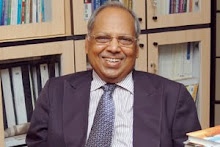 Dr. T. V. Rao is currently Chairman, TVRLS. He was a Professor at the Indian Institute of Management Ahmedabad and until recently IIMA Society and Board member. He is Co-founder of the National HRD Network and Academy of HRD in India. He initiated the HRD Function and movement in India in mid-seventies starting with Larsen & Toubro, State Bank of India and other organizations. Dr. Rao authored over 60 Books, worked as short term consultant with UNDP, Malaysia; UNESCO, Bangkok; IIEP, Paris; USAID, Indonesia; Commonwealth Secretariat, London etc. and received many awards from various bodies including APFHRM HR Professional of the year 2019.
360 Degree Assessments: How Valid are They?
360 Degree Assessments: How Valid are
they
Prof. T. V. Rao
Chairman, TVRLS
(tvrao@tvrao.com)
The term 360 Degree Feedback or 360 Degree Assessments is a
western invention. It resulted essentially from a desire to enhance objectivity
in performance appraisals. Multi-rater feedback, multi-rater assessments, Full-circle
feedback etc. are the other names used originally improve and supplement annual
appraisal ratings. Following this tradition many consulting companies including
those from across the borders are engaged in using and promoting 360 Degree
Assessments for promotion and other administrative decisions. This is likely to
cut at the very root of development. It is high time CEOs and Policy makers
recognize the potential disadvantages and even dangers of using 360 Degree
Feedback based assessments for such decisions.
In India, we started this methodology, based on our own insights
and thought to collect anonymous feedback to stimulate leadership thinking and enhance
organizational effectiveness. A program with this title was offered in mid-eighties
at IIMA by the author of this paper. This methodology was evolved out of years
of experience of using psychometric self-assessment tools. when such instruments were sued in IIM, XLRI
and such other classrooms, the participants used to say: “Professor, you have
collected responses from me to a questionnaire and on the basis of my responses
classified me as achievement driven, affiliation driven, internal, external
etc. I would have found it more beneficial if you collected how other people
perceive me and my personality”. This combined with questions about the T-Group
technology used and promoted by NTL and its Indian counterpart ISABS where participants
meet is stranger groups and given and receive feedback about each other using
the group as a mirror. I used to question that we seem to trust strangers in a
few days more than those with whom we work in our workplace for years. Why not we
change this phenomenon and learn to trust each other by feedback from known
people (FFKP). A program was launched to collect feedback from known people a
work place and provide insights into one’s own behavior and enhance one’s impact
in mid-eighties. Later it acquired the name 360 Degree feedback - a term that
came from the west. This essentially happened as Indian brands and concepts
take time to get the respect the western concepts and brands have.
Sometimes I wish we called it “LRSF -Lord Rama’s Style of feedback” rather than 360DF, because I
believe that all good kings (and leaders) keep collecting feedback about the
way they are perceived as rulers and the way their subjects experience the good
or bad part of their leadership.
For the last thirty years since we started the first program
on “Leadership styles and organizational effectiveness” at IIMA in mid-eighties
and later popularized this approach through the term 360 Degree Feedback, a lot
of things have happened. For almost two decades between 1990 and 2010 we have meticulously
avoided using 360 Degree Assessments and promoted 360 Degree Feedback as
Leadership and managerial improvement tool or capacity building tool. We were happy
to find companions like the Center for Creative Leadership in the USA follow
the same philosophy.
In recent times the first shock came from a Gulf based
country where a consulting firm was reported to have used 360-degree Feedback
and gave the results to the company and the company not only used the data to
supplement their appraisals but also downsized itself using the 360-degree Feedback.
It is said that most people in that country started hating the term 360 Degree Feedback
at least for some time. The consultants always have a way to escape the curse
by stating that the company never followed their instructions or even deceived them
etc.
In recent times I
found in India most organizations and some of those particularly in public sector
including banks have begun to use 360 Feedback as more of 360 Assessments than
as leadership development tools. There are organizations and particularly
in IT sector that used 360 Assessments as a part of their performance appraisals.
They use 360 assessments in a mass application form for supplementing
performance assessments and pay little attention to the tool for development purposes.
When you use 360 assessments the scale
is shorter, routinized and can be completed in less than five minutes. Imagine
a manager claiming that he has got a better align this time on initiative it has
moved by a few points. It is now 3.58 instead of 3.45 last year. And another
manager claiming that his 360 assessment overall has gone down by 5% as
compared to last year but it is up by 20% in the overall company ranking. I
always wondered where is development in such conversations.
We have always
maintained 360 Degree feedback is as subjective as any other feedback. It
is to be taken to provoke yourself. If you are rated high on any quality, it puts
responsibility on you to maintain and live up this assessment in the next few
months and years so that the strengths are maintained and even improved. If a
weakness is pointed out and you don’t agree, your task is to prove that the
weakness is not a part of you, by consistently demonstrating in the days to
come you are not exhibiting this anymore. That
is how we positioned 360-degree Feedback in Lord Rama’s style to say that even
if one person says things that are negative about you, you should care for it
and work on it to eliminate, and similarly even if one person says positive
things you should care for it and multiply. That is the way leadership or managerial
effectiveness can be developed.
When we started the Leaderships styles and organizational effectiveness
workshops using what is now known as 360 Degree feedback we followed a design
that was developed by us indigenously. We used to survey the psychological and
emotional climate created by the candidate along with the 360 feedback. There used
to be an accompanying organizational climate survey and tabulation of results
for the department or the work area of the candidate and link it with his
style. The workshop lasted three full days first to understand the concepts and
tools of measurement, then prepare to receive feedback, the feedback itself
which used to be given in a tabulated from with all sorts of analyses, then
reflection, then study implications, examining the climate created setting aspirations
for the future and then concluding with an action plans. A few of the PSUs like BEL and NTPC at one time followed this methodology
meticulously for many years. They even conducted follow up workshops and the
data were never shared with the organization. Only action plans were shared at
the end and follow-up workshops were conducted to discuss the issues in
implementing action plans to demonstrate more leadership. Perhaps
many organizations have given up this methodology over a period of time when
pressures got built on them to go for mass application of 360 Feedback and mass
development of leaders. Leadership
is essentially and individual phenomena. Organizations a create climate and
provide opportunities for developing leadership talent. It can never be
developed by regulation and fear. If any, regulation
and administrative controls to develop leadership often results in drama,
politicization and role plays and thwarts sincere development.
In 360 Feedback if any manager knows that the data are going
to be used for administrative proposes like promotions, transfers, incentives,
performance linked pay etc. then the mangers have a knack of managing good
ratings. Some organization by nature are
not accustomed to rate their juniors anything less than 98% in ratings. For example,
about 20 years ago in a Nationalized bank I tried anonymous assessments by Branch
managers of their Regional Managers for a group of Regional and Zonal mangers
attending a managerial effectiveness program. Howsoever I assured them of
anonymity by personally meeting the assessors, I found the ratings to be never
a less than 6 on a six-point scale on large number of items. I discovered
that in this Bank and perhaps many other banks there is a habit for rating each
other always excellent, no matter that one may feel privately about the
individual. After all they belong to the same family. This is collective connivance.
There are many organizations where such collective Connivance exists and particularly
in PSUs and PSBs. In such cases a lot more work needs to be done to use 360
tools effectively.
Using 360 assessments as mass application rather than a
genuine leadership development tool will only result in more cynicism. It may end up in most employees and their
unions, associations and top level management concluding “after all this also
has failed”. I suspect any organization and consulting firm that uses and encourages
360-degree Feedback as a promotion or performance appraisal or administrative
tool and for mass application. They are either playing to the gallery or administrative
caveat or to the top line of their consulting firms. 360 Feedback as leadership
tool has got to be intense and carefully orchestrated effort. Don’t jump into
this because it is fashion. Only after a fell maturity of managers by a collective
decision this can be considered.
Dr. T. V. Rao is currently Chairman, TVRLS. He was a Professor at the Indian Institute of Management Ahmedabad and until recently IIMA Society and Board member. He is Co-founder of the National HRD Network and Academy of HRD in India. He initiated the HRD Function and movement in India in mid-seventies starting with Larsen & Toubro, State Bank of India and other organizations. Dr. Rao authored over 60 Books, worked as short term consultant with UNDP, Malaysia; UNESCO, Bangkok; IIEP, Paris; USAID, Indonesia; Commonwealth Secretariat, London etc. and received many awards from various bodies including APFHRM HR Professional of the year 2019.
Subscribe to:
Posts (Atom)