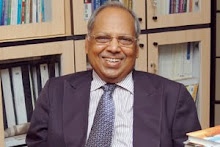
In Conversation with Dr. Rao:-
1.
What is your opinion of HR in the country?
Both good and not so good. HR as
discipline and a profession has made some impact but not as much as it could
have. HR professionals are continuously missing opportunities to make a higher-level
impact. Post liberalization when IT sector and new economy industry are putting
India on the world map, and knowledge economy was developing HR should have
lead the knowledge economy. It should have focused on continuous competency
building and creation of learning organizations. In some of the sectors that
have created a learning culture it is more attributable to wise CEOs than their
HR professionals. Similarly, with the emphasis on skill development, startups
and make in India, HR professionals should have been in the forefront to conceptualize
and run the massive effort to transform the country. The current drive against
corruption through demonetization needed a lot of HR interventions. We hear no
one consulting HR professionals on a massive HR issue caused by demonetization.
No one even thinks if HR has a role. HR’s failure is its limiting itself to
corporate sector and keeping itself away from the rest of life while it is
supposed to deal with human beings.
2. Do you think Indian
HR & HR Leaders are running in the right direction? What would you like to
change, if given an opportunity?
Yes, HR and HR leaders are running in
the right direction in terms of short term management and getting immediate
results and managing the show in corporate sector. They have been contributing
to employee recruitment, engagement, retention, and such other issues
reasonably well but can do far better with some originality and creativity.
I would like them to focus more on long
term building of human capital within and outside the firms. I would like them
to focus a lot more on values, culture building, leadership development, and employee
motivation. They should begin to work with the government and transform the
government to deliver better services. HR’s main job is to make the
organizations, institutions and nations happy places to live through
competence, commitment and culture building at all levels.
3. What do you think
are the competencies which Indian HR Leaders should work on, keeping in mind
that we would be one of the youngest workforces in few years?
In my view OCTAPACE values is very
critical: Openness (giving ideas and creating a culture of openness),
Collaboration (enabling people to sacrifice narrow individual interests for
larger team, organizational and national goals) , Trust and Trustworthiness,
Authenticity speaking what you feel rather than what pleases other person),
Pro-action and Initiative, Autonomy (exercising discretion and creating space
for people to sue some discretion), Confrontation (of issues and fearlessly
giving views and opinions) and Creativity and innovation. Commitment to the
firm, to the communities and society which give us the context to live. Professionalism,
change management, influencing the CEOs, Giving right direction to the CEO and
customer sensitivity. Ability to design and use HR policies and processes that
cater to the changing needs of the people with a view to identify, harness, develop
and utilize their competencies
4. How do you think
they should upgrade themselves and these competencies, keeping in mind the globalization?
More self-reviews need to be
undertaken by HR fraternity. They should seek 360 Degree Feedback. They should
have a lot more international exposure, more exposure to customers and
business, more focus on competency, commitment and culture building. They
should review their roles in administrative tasks and focus more on
developmental activities. They should focus on human capital building
activities and get their performance reviewed on intangible contributions a lot
more. They should also spend time in villages and work with NGOs and other
groups to understand the country, its roots and culture.
5. Any advice to the
one-click generation readers of BW HR who are making a career in HR or have
just started their career in HR?
Learn about the business you are entering.
People have taken long time to build institutions. Read history and learn about
the need to be customer driven and committed. Stay long enough in a company.
Don’t shift jobs like you change your screens at a click. We appreciate your speed, and your need for
independence and entrepreneurship. Invest your talent in the company you work
and make a difference. Companies offer you lot more scope to experiment and
make things happen. Pick up right
systems and work on them. Improve your own expertise and credibility. The world
is changing and seniors are beginning to show their willingness to learn just
as your parents have begun to learn from you. If not, change the culture and
that is your challenge.
6. Is Engagement an
overhyped term? Are we not having enough right implementers? I am coming from
the overall fully engaged score of 13% globally and 9% in India.
I am not sure if I agree fully with
the statistics and figures that indicate low levels of engagement in Indian
workforce. They are certainly engaged, although it could be improved a lot
more. We have built our country as a subsidy culture. Everyone expects their
organizations, HR departments and country to create conditions for more
engagement. This approach itself is wrong. It looks as though employees depend
on the firms to make them engaged rather than they themselves taking ownership
for engaging. Our consulting firms have wrongly promoted employee engagement as
the sole responsibility of HR policies. Rather we should turn the tables and
make employees responsible for enhancing their own engagement levels. A less
engaged employees does a lot more harm to self and his/her family and creates
stress all around. No HR policies can make all people equally engaged. High
time HR works for shifting the ownership of engagement equally to
employees. Today’s youth will leave as
soon as they feel they are not engaged. So, measuring employee engagement and
commitment have become very important HR challenges. If talent is not utilized engagement
comes down.
7. Most HR leaders in
large organizations have become more HR administrators than HR implementers.
What is your take on it?
Yes. I am afraid that is true while
there are some honorable exceptions. This has become so particularly true in
the Public sector including the banks which is the largest employer in terms of
people. HR has administration driven and innovation e averse. The days of
uniform HR policies are gone. We now need innovative and heterogeneous HR
policies and practices a to contain complex and diverse workforce.