Boards of IIMs: Roles
and responsibilities
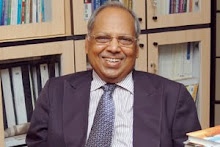
T. V. Rao
(Chairman TVRLS, Former Professor at IIMA, Founder President National
HRD Network. Dr. Rao was associated with the Ministry of HRD in mid eighties
when the new education policy was formulated. He was on the Sub-committee on
Management of Education Headed by the HRD Minister at that time. Subsequently
he was on the Committee to Review NIEPA. Recent years he served as a consultant
to the Administrative Reforms Commission on Civil service Reforms, and on the
Ministry of Finance Committee on HR in Banks (Khandelwal Committee). Dr. Rao
also worked as HRD Advisor to Reserve Bank of India earlier. T. V. Rao can be
contacted at: tvrao@tvrao.com)
The Boards
of IIMs are the Chief custodians of the Management of these Institutions. The
vision, mission, goals and objectives of IIMs are well set for these institution. It is the Faculty and staff that make sure
that the Institution strives to achieve its vision, mission and goals under the
leadership of its Director. The Boards should remember that there is a substantial difference in academic institutions and corporate sector Boards. The Faculty of Institutions like IIMS, IITs, Universities and even schools and colleges are intellectual capital builders. In good Institutions like the IITs and IIMs and other Higher education & research centres the faculty set their own targets, programs and develop new research areas. The Board's job is to understand them, respect them, guide and support them with funding and other ways. For this purpose the Board should interact periodically with the faculty appropriately and get to know their work. At IIMA periodic Society conferences are organised to show case the work of faculty. The Board members should spend adequate time to attend such events and if they can't at least devote a meeting or two to discuss the lessons from the same and evolve support policies.
The Chairman and Board are non-executive Governors
of the Board. They don’t execute though they are termed as having the role of
executive body. They enable the Director and his/her team to execute and carry
out various activities. They meet once a
quarter and at best for a day each time. With four days on inputs in a year we
don’t expect the Board to make the institute achieve its goals. They are not
comparable to the Boards of Directors of companies. There is a lot of
difference between the way corporate Boards function and the Boards of
Educational Institutes function. The
Board provides linkages between the
Institute and the environment or the society at large, interprets the environmental
needs and opportunities and provide direction for the Institute and its faculty
to review, launch and re-launch their programs including teaching, research,
dissemination or change management
activities. They also review the performance of the Institute and its
Director from time to time and approve the budgets and balance sheets. They also help raising funds for where required.
The Boards
are normally thought fully constituted to represent the outside society or
environment so that the IIM can have maximum impact and achieve the purposes
for which they are set up. The members
of the Board normally include representatives of the Government, Industry,
other stakeholders and the Society at large. For example there are normally one
representative of the MHRD and one of the State Government and in addition one
each nominated by the Centre and the State. In addition two eminent people to
be nominated by the Board from Alumni and three to nominated by the Government
to represent different sections of society (education, industry, government and
or special groups that need attention). Two represent the faculty, and four
members representing the Registered Society if the Institute is a registered
Society under the Societies Registration Act like the one at IIMA.
The Board
members have both an individual and collective role. Individually each member
has a role to play to represent the interests of the group for which he/she has
been nominated/appointed.
Individual Responsibility:
Faculty members on the Board are the active voice of the Institute and
ensure that the other members are informed about various activities and
concerns of the Institute, its needs, accomplishments, challenges etc. and seek
solutions or give policy inputs.
The members
representing the Registered Society (under 1860 Societies Registration
act) has the responsibility to represent
the society’ views to faculty, build bridges between the Institute and Society
members, expand membership, collect views and inputs from the Society and present
the same to the Board to be translated into policies and practises. For this
they should be constantly in touch with the other members of the Society.
The MHRD or
Central Government and State Government representatives have the role to play of
informing the National and local priorities and guide the Institute to serve
the National and local (State) level needs and interests.
The Alumni
have the responsibility to represent the alumni interests and ensure that
feedback is available to the Institute from alumni so that changes that help
the institute move towards better curricula and better programs can be made
available and also ensure that the alumni contribute to the financial health of
the Institution.
The other
members representing special interest groups like Industry including women, SC/
ST, or sectoral groups like Banking, petroleum, education etc. depending on the
reasons for their appointment) should draw attention of the Board and Institute
to National concerns of the groups as and when an opportunity arises.
Collective responsibility:
The Board
should normally transcend their individual points of view and collectively work
for the good of the Institution all the time. Sometimes there could be conflict
and in resolving the conflicts they should be able to rise above the specific individual
interests and work for the good of the Institution. Team work is the most
essential part of the Board. If the Board’s divided view gets communicated to
faculty, it affects the excellence and does not give right direction to
faculty. It may leads to politicisation of the issues. The Board is there to
support faculty, lay down broad policies and guide the faculty to govern
themselves well. The Board is not an Executive Board. It is also not an Advisory Board.
It is a mixture of both and in Academic Institutions the Board should remember
that they are helping a group of highly knowledgeable scholars who get
disturbed and de-motivated if they are not given proper support for their
teaching, research and other academic work. The Board therefore does
not get into individual cases and does not also get into decision making as far
as possible. The only time they get to play active role in decision making is
when they appoint the Director to lead the Institute or establishment of new centres
which require big funding and their interventions. Other times include some
exceptional cases of termination of faculty services or some financial norms,
incentives have to be fixed, or big funds are to be accepted etc. They could direct the faculty to start
certain type programs or step up certain types of activities or scale down
others etc. so as to serve the purpose for which the Institute is set up.
By virtue of
its constitution the Board members may have different points of view. It is the
role of the Director to present the Institute views and interest and take the
help of the Board. The Chairperson has a very significant role to play in
harnessing the different points of view and driving the Board to consensus make
intelligent decisions or formulate policies. He should ensure that no vested
interests develop nor any one section by virtue of its roots or origins
dominate and twist the discussions.
Chairman, Board and the Director:
These three
play a keep role and their chemistry decides a lot of how the Institute
develops. Their interrelationship should be one of trust and mutual respect.
Trust can be built through continuous communication. Such communications from
the Chair should not be seen as interference on the part of the Director and
the Chairman could set a positive and non-threatening agenda for such
communications.
A very significant role
gets played by the Board at the time of selecting the Director. Normally it is
good for the Chairman to keep himself out of Search Committee as he always had
a lot of say at any point. When the Search Committee is constituted consisting
of eminent people, they are likely to be respected for their suggestions and
also they do consult the Chairman.
Chairman taking over-active role in the
Search creates some times gives wrong perceptions that he may be favouring some
one or the other and leads to politicisation. Even if he/she is a part of the
Search, if the Search Committee is constituted with people of stature, is above
Board and does not have any interests or preferences for particular candidate,
it creates a healthy atmosphere. They should have the single most important
objective of finding a good leader of excellence who can help achieve the
Objectives of the Institution and take it to newer heights.
Some times when the Chairman or a few members play an active role in the selection of the Director, the Directors subsequently tend to be more communicative with them selectively. Such Chaimran and Board members create new power centres and may run the risk of turning a blind eye to the styles and impact of the Director.
Director’s job is a bed
of thorns. How so ever excellent he or she may be some negativism does get
generated and academics are very expressive of their unhappiness. The Search
Committee or the Board should be able to listen, decipher the reasons and guide
the Director where necessary and provide healing touch where possible. I have
recommended an annual 360 Degree feedback for IIM Directors initiated by themselves.
A 360 feedback annually or at least once a while helps the Director to
be sensitive to the impact he/she is making. A 360 taken in early years of
tenure can save a lot of negative energies that get developed.
If the Board
get into delays in decision making (in laying policies or resolving conflicts etc.) it leaves the faculty guessing and runs the
risk of starting new politics of alignment and realignment. It disturbs the
academic culture and diverts the attention to other issues. It happened almost
two decades ago at IIMA, when one of the Director’s appointments was delayed.
There were letters to MHRD and the Faculty got divided and ended up wasting
their time. It also made the life of the Current as well as the newly appointed
Director difficult. In my view it took a long time to heal the wounds generated
by the delay. It made an excellent Director less effective as he had to spend
his time undoing what has been done and in the process he ended up hurting many
more people.
Need for Performance Review of Boards
As per the
new company law, the boards would have to lay down the procedures and methods
for annual formal evaluation of performance of the board, its committees and
individual directors, Chairman and of the Independent Directors. The Schedule IV of the New Act specifies
additional responsibilities for the Independent Directors and their duties and
functions for the first time
• The companies would need to have
systems which would help familiarise the Independent Directors with these
responsibilities
• The Independent Directors will have
to meet exclusively at least once annually in which they will have to review
the performance of the non-Independent Directors, the Chairperson, and assess
the time lines of the information flow between the management and the board
• To do this the Independent Directors
would have to have proper procedures in place which would enable them to
conduct such meetings and carry out the reviews.
IIMs and IITs are
public Institutions. They are financed by public money and therefore their
Boards have a larger responsibility to ensure that the institutions are
governed well and achieve the purpose for which they have been formed.
A large
number of Board members including the Chairman are non-executive members of the
Board and therefore have a larger responsibility to ensure smooth functioning
of the Institution.
In an
academic institution where there are no tangible measures to measure the
achievement of goals in short term apart from placement data, revenues and
expenditure, business rankings the real functioning of the Institution, its
contribution to intellectual capital generation in short term becomes an
essential ingredient.
IIM Boards should
consider as a good governance practise to evaluate its functioning and also lay
down clearly the roles and responsibilities of all its members. Special
attention needs to be paid to the performance evaluation of the Chairman
various committees, Director and other members of the Board. Without the
Board’s involvement in all these the institutions run the risk of going
in their own direction.
(The thoughts here are personal and based my own experiences and narrations by those like Ravi Matthai, Udai Pareek and others from whom I learnt)

No comments:
Post a Comment